
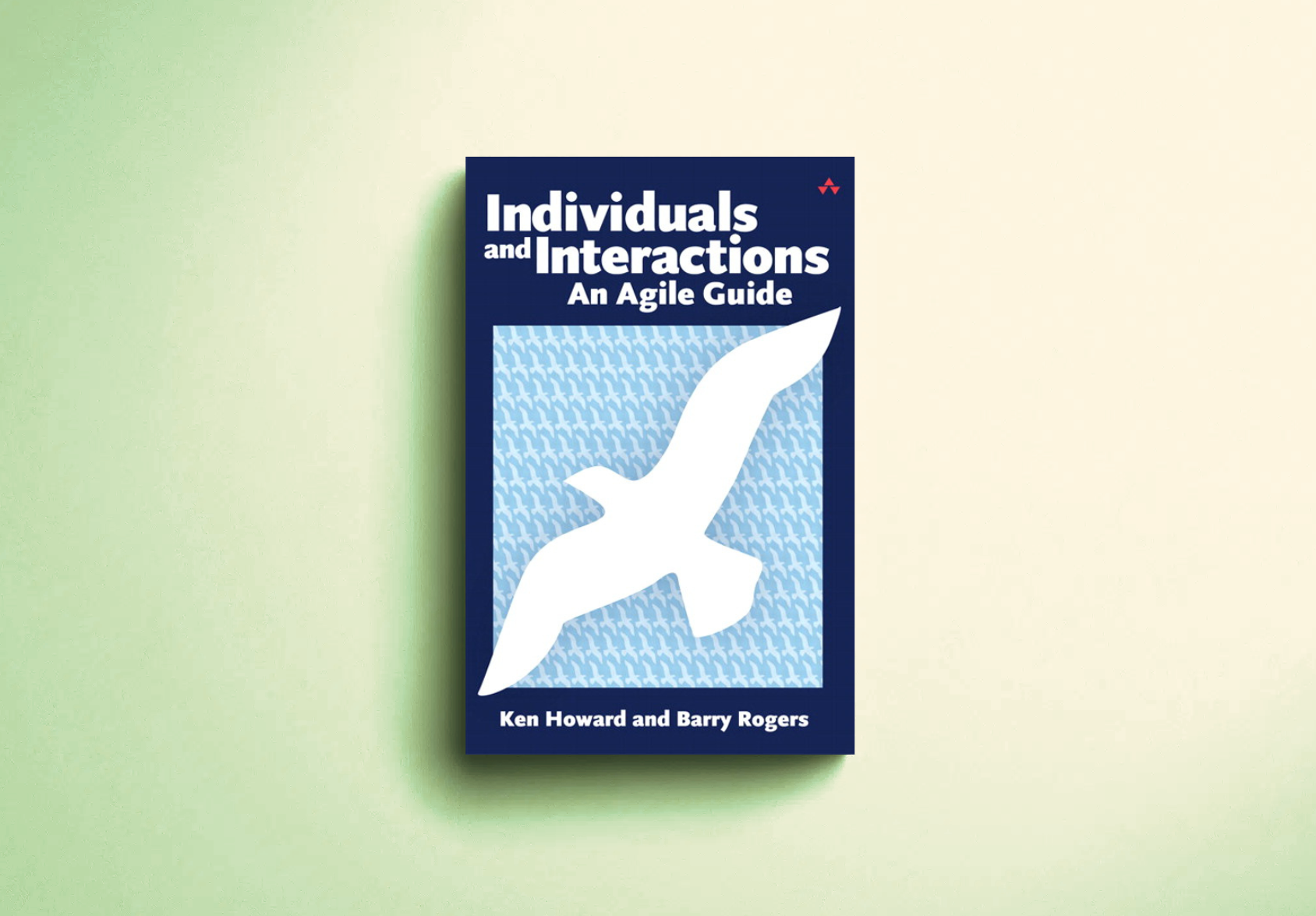
Some time ago, after I wrote a review of The Clean Coder, I received a tweet from @InformIT mentioning they enjoyed my post. After a few emails with a representative from Pearson, I received three books to read and review. Individuals and Interactions: An Agile Guide is the first of them.
Review
You likely know this sentence: “Individuals and interactions over processes and tools”. For those who don’t, this is the first value of the Agile Manifesto—a set of principles defining agile software development. If I had to describe or review this book in a single sentence, that quote would be the best way to summarize its content and general philosophy.
In my opinion, most books regarding Agile focus on the other three values, while the first is often forgotten or neglected. However, Individuals and Interactions: An Agile Guide is different. It concentrates specifically on people as team members. It shows how to take advantage of differences in developers’ personalities, how to find “work-arounds” for personality traits that might cause friction within a team, and how to prepare for conflicts so they don’t distract the team from their work. Most importantly, it demonstrates how to motivate people in various ways to create an effective, communicative team where no one feels ignored or alienated.
The book is divided into two main sections:
- Theoretical Foundations: This part describes the mechanisms and interactions that occur within a team. It is written from the perspective of a coach or mentor whose responsibility is to improve team skills. It uses real-life scenarios to explain what actions were taken to increase team quality and why.
- Practical Workshops: This section contains detailed descriptions (including preparation, materials, and schedules) for workshops that a team can use to improve specific areas. It includes the DISC assessment, which helps determine a person’s behavioral pattern: D (Dominance), I (Influence), S (Steadiness), or C (Conscientiousness/Critical Thinking).
Reading this book was a valuable experience. Anyone interested in team interactions or improving their communication skills—not just developers—will learn a great deal about themselves and how team dynamics truly work.
My Notes from the Book
The DISC Model
Everyone’s behavior is a blend of four elements. Understanding these is essential to leveraging a team’s diverse strengths and anticipating future conflicts:
- D – Dominator: Straightforward, self-confident, and likes to make fast decisions. They have a tendency to interrupt and are often “born leaders.”
- I – Influencer: Uses expressive gestures and facial expressions. They are optimistic, trustful, and usually the best communicators.
- S – Supporter: Has a strong need to help others and possesses great listening skills. They are the ultimate team players but need appreciation.
- C – Critical Thinker: Values perfection and quality. They concentrate on details and are thoughtful problem solvers, though they can be cautious decision-makers.
I took the assessment included in the book and discovered that I am a strong S and C, and not a D at all!
Communication Latency
We often think communication is faster today because an email can travel five thousand kilometers in seconds. However, the book introduces communication latency: the delay between when a message is sent and when it is received and processed.
Face-to-face conversation has the lowest latency. E-mails or written documents have the highest. The larger the latency, the higher the risk that a message will be ignored or misunderstood due to a change in context between sending and processing.
Strategies for Communicating
- With a D: Be concise, get to the point, and present facts and alternatives.
- With an I: Be friendly, ask questions, and keep it light/fun.
- With an S: Be a team player, draw out their opinions gently, and suggest outcomes.
- With a C: Be serious, prepared, and detailed. Provide solid evidence and allow time for questions.
The Perfect Team
A perfect team should consist of various personalities that complement each other. Ds push for fast decisions, Cs ensure detail and quality, Ss bring harmony, and Is keep energy and communication high. A team of only Cs might produce excellent code but could spend days over-analyzing a problem when “good enough” would have sufficed.
Motivators
The key to success is applying the correct motivator to each team member. There are six types:
- Theoretical: Motivated by learning and discovering the “why” behind things.
- Utilitarian/Economic: Motivated by practical results and financial gain.
- Aesthetic: Motivated by beauty, balance, and pleasant surroundings.
- Social: Motivated by helping others; they often sacrifice their own needs for the group.
- Individualistic/Political: Motivated by personal power, influence, and job titles.
- Traditional/Regulatory: Motivated by structure, rules, and order.
Summary
Learning from this book will bring you a few steps closer to being a better developer and a better teammate. It’s about much more than just code; it’s about the people who write it.